Product basics
What is an FIBC bulk bag?+
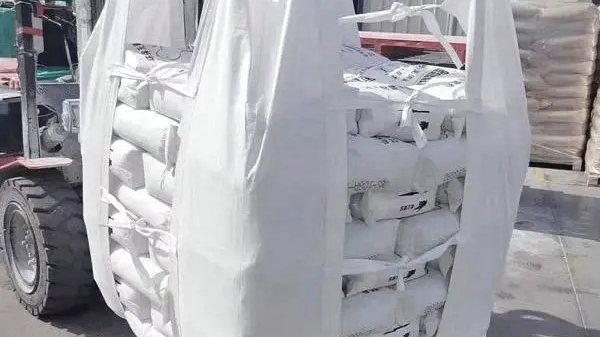
An FIBC (Flexible Intermediate Bulk Container) is a large flexible container made of polypropylene (PP) woven fabric with lifting loops, handled by crane or forklift, used to store and transport dry, flowable bulk materials. Capacity is typically 500–3000 kg. Also called jumbo bag or super sack.
What materials can your bags hold?+
Chemical powders, fertiliser, plastic pellets, mineral powder and ore, cement and building materials, sand and aggregate, starch, flour, sugar, salt, milk powder, nuts, feed, new-energy battery materials, dangerous goods and hazardous waste, and recycled materials.
What SWL ratings are available?+
500–3000 kg, with standard steps of 800 / 1000 / 1200 / 1500 / 2000 / 2300 kg. Safety factor is 5:1 standard; 6:1 is recommended for abrasive ores and repeat handling.
What bag constructions do you make?+
Four main structures: U-Panel (lowest cost, most common), 4-Panel (stable under load), Tubular / Circular (no side seam — best for fine-powder leak prevention), and Baffle (stays square, +15–20% container fill).
What lifting-loop options exist?+
2 loops (≤1000 kg, economical), 4 loops (≤1500 kg, most common), 4+2 loops (>1500 kg, more stable), and single-loop integrated lifting (seam-free, for clean/new-energy use). Loop width 50–80 mm, all reinforced with back-stitch and knot.
How can the top and bottom be designed?+
Top: open / skirt-with-cover / small spout with tie. Bottom: flat / spout / cone (30°, up to 99.5% discharge) / cross bottom / lattice bottom.
Can bags be lined?+
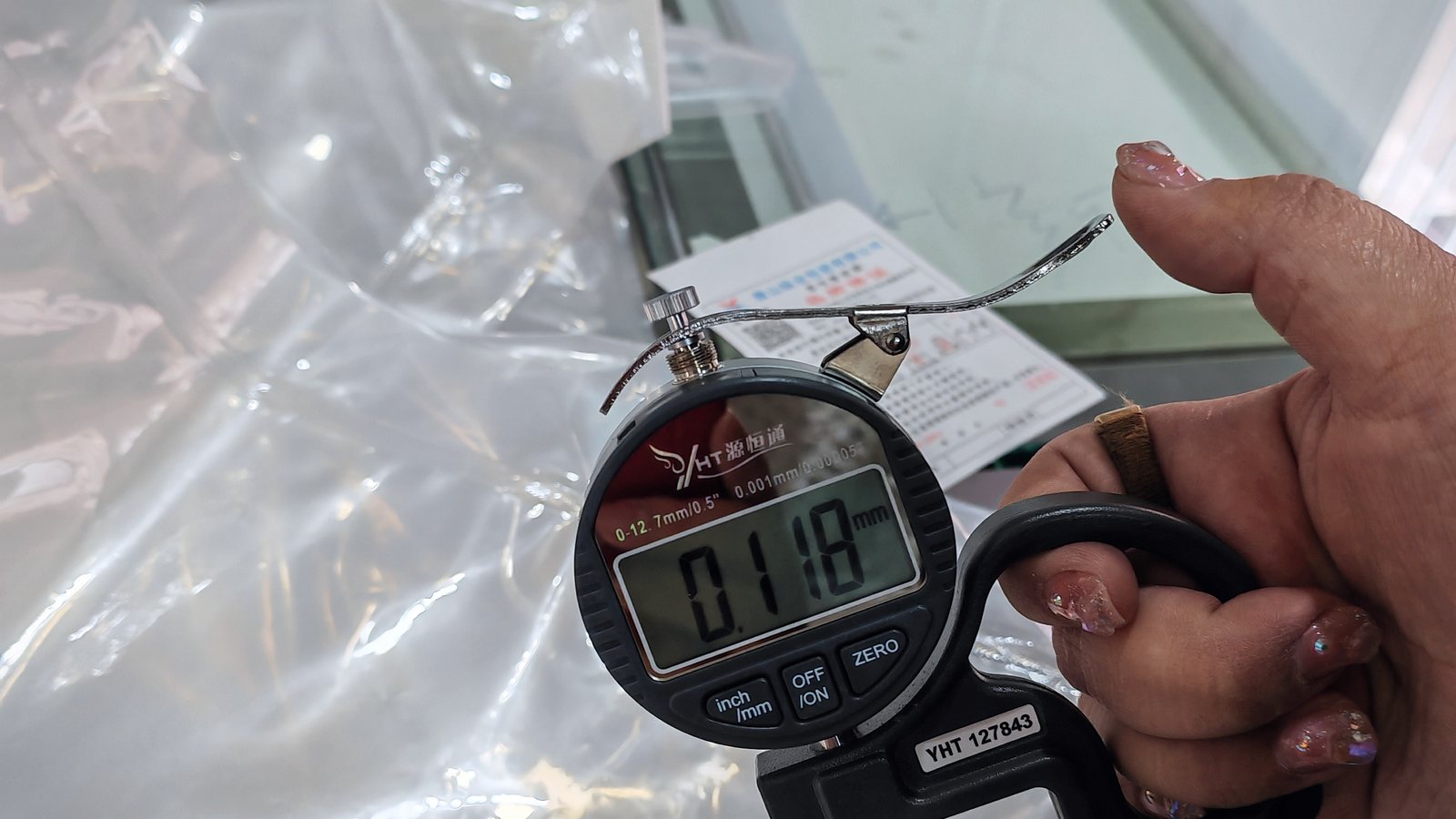
Yes. PE liner (0.06–0.10 mm), form-fit liner, PE coating, aluminium-foil composite (PET/AL/PE), and food-grade liner — heat-sealed for leak and moisture protection.
How many times can a bag be reused?+
General materials 3–5 times; 220 g/m² heavy bags 6–8 cycles on abrasive ore; 250 g/m² up to 8–10 under controlled conditions. Inspect base fabric, seams, loops and bottom before each reuse.
Customization & design
Can you fully customize the bag?+
Yes. Dimensions, lifting loops, top opening, bottom structure, liner type, fabric weight, UV treatment and printing are all adjustable. We have delivered 1,100+ custom specifications.
What information do you need to customize?+
Material name and traits (particle size, bulk density, abrasiveness, moisture, temperature), net weight per bag, filling/discharge method, lifting equipment, transport mode and duration, storage conditions, target-market regulations, and printing content.
Can you provide drawings?+
Yes. We provide CAD structural drawings and renderings, confirmed before sampling. Special structures such as built-in pallets and hollow-board inserts can also be drawn.
How long does sampling take, and is it charged?+
Standard stock samples: 3–5 working days, free (freight collect). Custom samples: 7–10 working days, sampling fee charged, refundable against a bulk order.
What is the minimum order quantity?+
Standard specs (e.g. 1000 kg, 95×95×115 cm): 500 pcs. Non-standard size, special weight or custom printing: 1,000–2,000 pcs depending on complexity. Trial orders can be negotiated.
Do you do OEM / ODM?+
Yes. We support customer-brand printing, dedicated specs, individual packaging, and neutral packaging.
Technical performance
Will fine powder leak?+
Tubular bags have no side seam — the best structure for fine powders. With PE coating or a separate liner and heat-sealed closure, material loss can be held below 0.05% (vs ~2% for ordinary bags).
Which bag for abrasive ore?+
220–250 g/m² high-strength base fabric, 4-Panel + cross/lattice bottom, double reinforcement at stress points, optional wear-indicator line for reuse checks.
What temperature can the bag withstand?+
Standard PP base fabric: continuous use up to ~85 °C. Hot asphalt and similar 160 °C materials need an aluminium-foil composite liner to reflect radiant heat and protect the outer fabric.
Can it be used in northern winters?+
Standard PP becomes brittle below −10 °C. Cold-resistant bags use a PP copolymer with glass-transition around −30 °C, retaining strength and flexibility at −25 °C — suitable for export to Nordics and Russia.
How do I choose an anti-static bag?+
Type A (no control), Type B (limited breakdown, dust only), Type C (conductive, must be grounded), Type D (static-dissipative, no grounding). Choice depends on the material's minimum ignition energy and the environment — confirm with a safety engineer.
Is outdoor storage possible?+
Yes, but add UV stabiliser (standard 6 months, extendable to 12–24 months). For long outdoor storage, a cover sheet is recommended to avoid water pooling.
How many bags fit in a container?+
20-ft container about 10,000–15,000 empty bags; 40-ft about 20,000–30,000, depending on bag size and packing. Baffle bags or compressed packing raise the load rate.
Quality & certification
What certifications do you hold?+
ISO 9001, ISO 14001, ISO 45001; food-grade production workshop certification; food-contact packaging certification; UN dangerous-goods certified FIBC; anti-static products aligned with ATEX; SGS / BV third-party test reports.
Is every batch tested?+
Yes. Incoming raw-material checks, in-process inspection, and outgoing batch tests (loop tensile, top lift, drop, air-tightness, appearance) — each batch ships with a test report and a unique traceability code.
Do you have food-contact test reports?+
Yes. Ten items of heavy-metal migration (PP fabric, belt, spout fabric, rope, conductive belt, conductive spout, PE film, foil PET layer, cotton tape, split-film yarn), total migration (EN & GB), phthalates, and MOSH/MOAH (EN).
Can you provide EU PPWR compliance documents?+
Yes. We completed the PPWR (EU 2025/40) compliance assessment and can provide material composition, recyclability, recycled-content and labelling files to support EU market access.
Do you have a dangerous-goods (UN) certificate?+
Yes. We hold UN-certified FIBC with performance test and use-appraisal certificates. Note: UN certification is bound to plant + model + spec; changing plant requires re-certification.
How are quality problems handled?+
We respond within 7 working days (with photo/video evidence). Failures under normal use within rated life are replaced or credited; we also trace the batch, machine and raw material and issue a root-cause analysis.
Order, logistics & payment
What is the lead time?+
Standard specs: 15–25 days after deposit confirmed. Custom: 20–35 days. Common specs are stocked for faster delivery.
How do you ship?+
Empty bags compressed and PP-strap packed, palletised. FOB Tianjin standard; CIF / DDP available. Sea to SE Asia 15–25 days, Europe 25–35 days, Americas 30–40 days.
What are the payment terms?+
T/T 30% deposit + 70% against B/L copy or before shipment. Irrevocable L/C at sight for large orders. Sample orders may use Western Union / MoneyGram. FOB Tianjin standard; CIF / DDP available.
Can you send samples?+
Yes. Stock samples ship free in 3–5 days (freight collect); custom samples in 7–10 days with a sampling fee. We recommend testing under real conditions before bulk ordering.
Do you have export qualification?+
Yes. We hold import/export operating rights and can declare and export ourselves, or work with your nominated freight forwarder.
Can packaging and marks follow our requirements?+
Yes. Coloured separation by spec, individual PE bag packing (food/clean-room), custom pallets, and customer-format marks and labels are all supported.
Can you issue an invoice?+
Yes. We can issue VAT special invoices (13%). Quotations default to tax-included ex-works price; details per contract.
Why does the price move?+
Mainly driven by PP resin price. Quotations are typically valid 3 days to 1 week; the price at order confirmation applies.
After-sales & company
Do you provide technical support?+
Yes. We provide guidance on filling, lifting, storage and re-inspection; on-site training for large orders; routine response by email and WhatsApp.
Will you compensate for a failed bag?+
Manufacturing defects are handled per the warranty clause; overloading, sharp-object cutting, improper lifting and prolonged sun exposure are outside warranty.
When was the company founded?+
Tangshan Zongye Packaging Co., Ltd. was founded on 13 August 2021, headquartered in Luannan County, Tangshan, Hebei. The team has been in PP woven packaging since 2013 — over 13 years of experience.
How large is the company?+
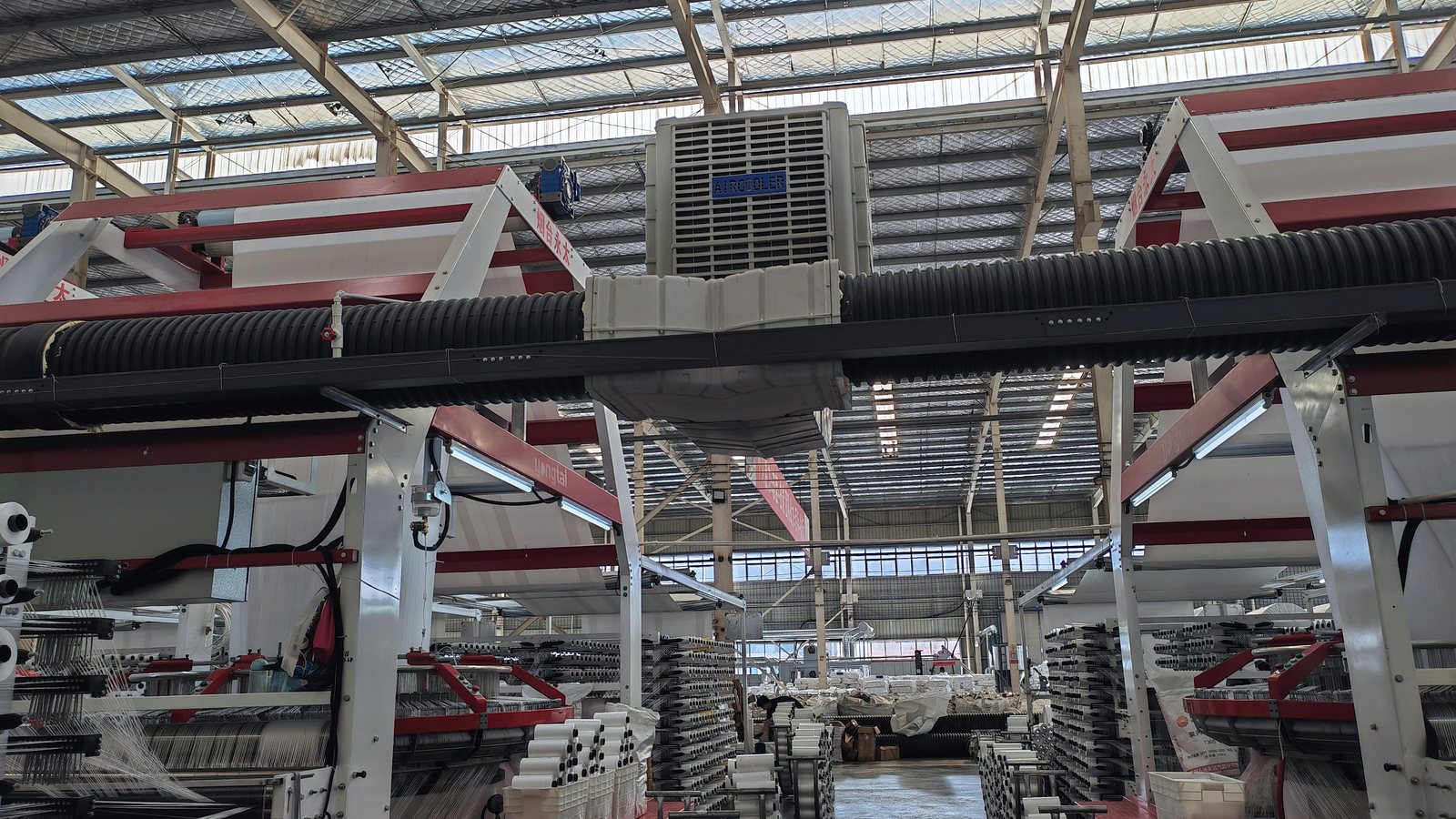
300+ production and technical staff, 300+ machines, 8,000 m² independent base. Annual capacity: 2,000,000 FIBC, 60,000,000 PP woven sacks, 30,000,000 composite bags, 15,000,000 liner bags, 300,000 Type C conductive bags.
Can I visit the factory?+
Yes. Please book at least 3 working days ahead so we can arrange the line tour and sample preparation.
What makes you different from other suppliers?+
Three provable points: non-standard structures (8 patents), compliance documents you can file (migration, heavy-metal, MOSH/MOAH, PPWR), and batch-to-source traceability via our Quality Passport system.
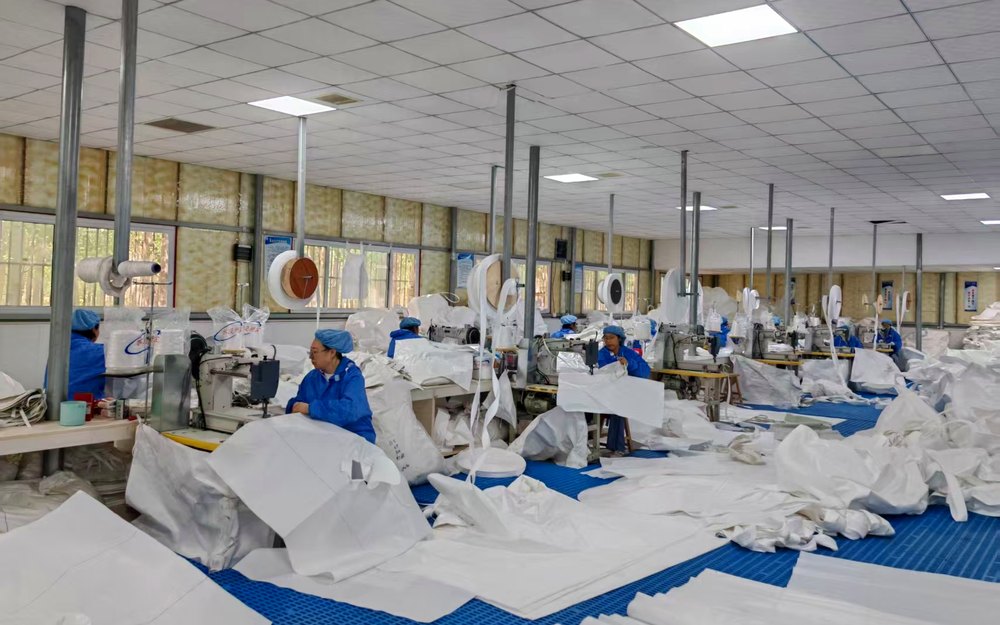 IN-HOUSE SEWING · IN-LINE INSPECTION