A Type C FIBC safely dissipates static only when it is grounded. ZONGYE weaves conductive yarn through the fabric and links every conductive part to a grounding point, with a resistance-tested structure aligned to IEC 61340-4-4 — built for combustible dust and solvent powders.
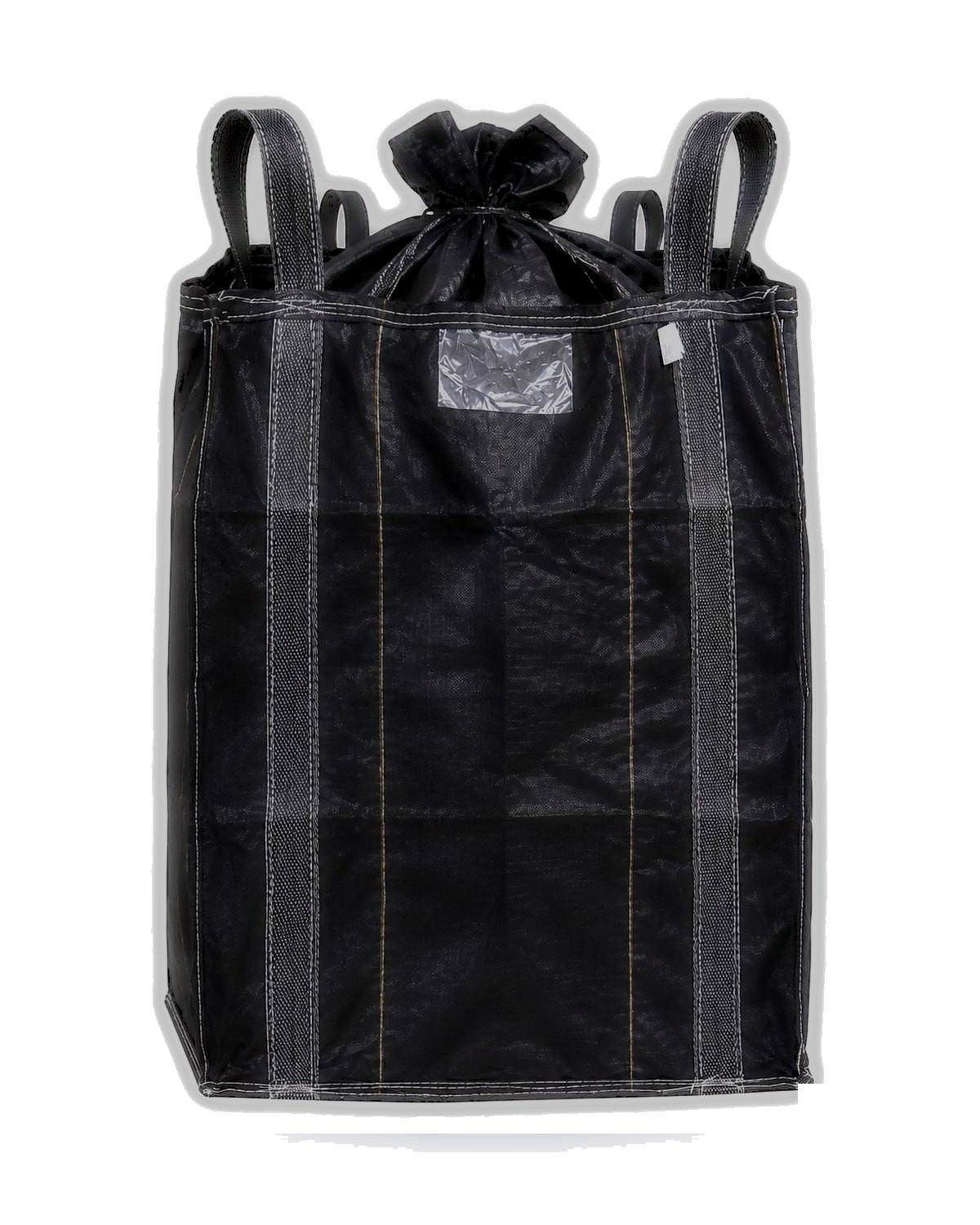
Confirmed against your material and grounding conditions. Do not treat Type C as interchangeable with Type A or D.
| Parameter | Typical value | Note |
|---|---|---|
| Product Name | Type C Conductive FIBC | Groundable / anti-static big bag |
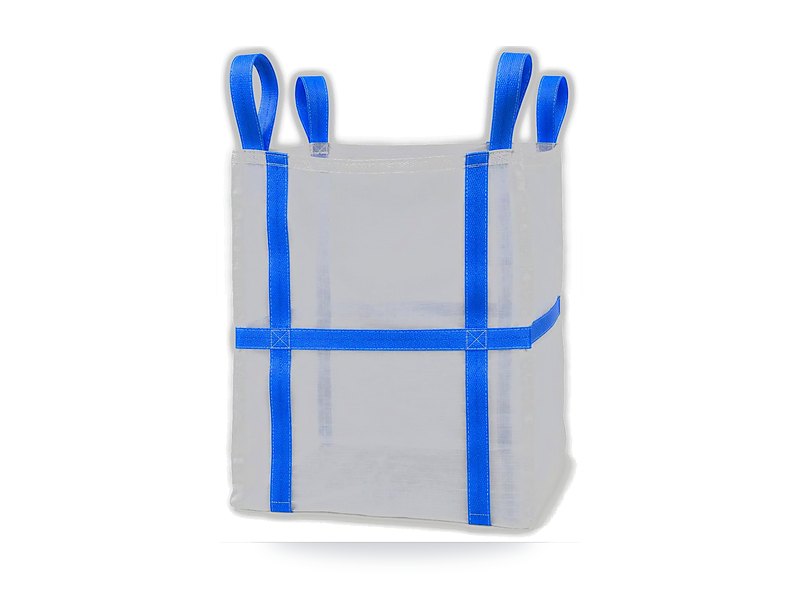
| Bag Construction | U-Panel / 4-Panel / Tubular | Conductive yarn interwoven |
| Material | PP + conductive yarn | Full conductive circuit |
| Dimensions | Customised | Per load and application |
| SWL | 500–2000 kg | Common 1000 / 1200 kg |
| Safety Factor | 5:1 / 6:1 | Per use cycle |
| Top Options | Filling spout / duffle | With grounding tab |
| Bottom Options | Flat / Discharge spout | Controlled discharge |
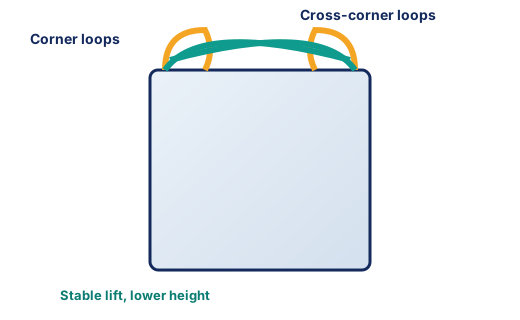
| Lifting Loops | 4 corner / cross-corner | Conductive option |
| Fabric Weight | 160–250 g/m² | Coated available |
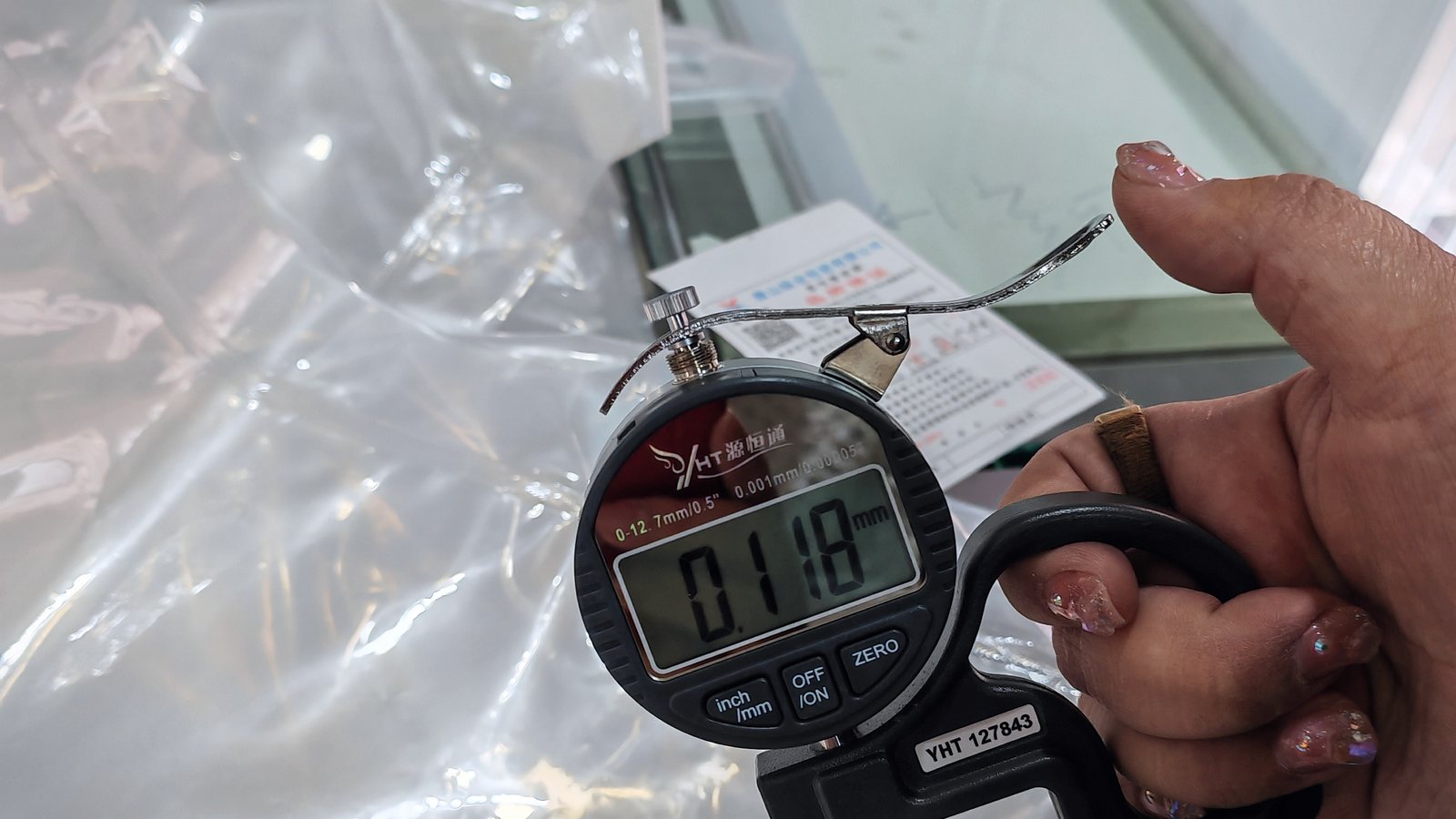
| Coating / Lamination | Optional | For leak control |
| Inner Liner | None / L1 / L1C / L2 | Liner classes per IEC 61340-4-4 |
| Printing | 1–4 colours | Anti-static label |
| Colour | White / custom | Typically marked |
| UV Stabilisation | Optional | Outdoor storage |
| Electrostatic Type | Type C (conductive) | Grounding required |
| Stitching | Lock-stitch + filler | Conductive seam path |
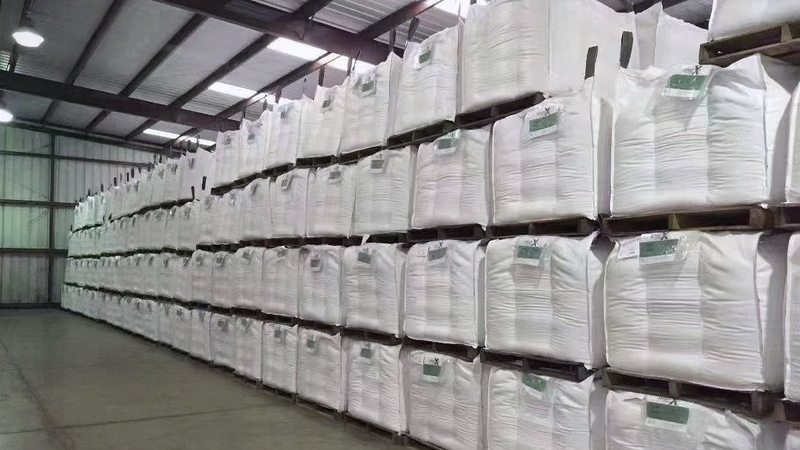
| Packaging | Bale / pallet | Clean storage |
| Compliance | IEC 61340-4-4 · ATEX | Resistance tested |
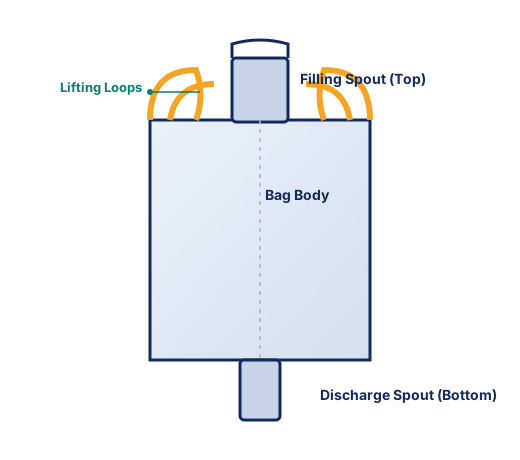
Conductive yarn interwoven across the circuit.
Filling point with accessible grounding tab.
Discharge spout keeps the bag grounded while emptying.
All conductive parts linked to the ground point.
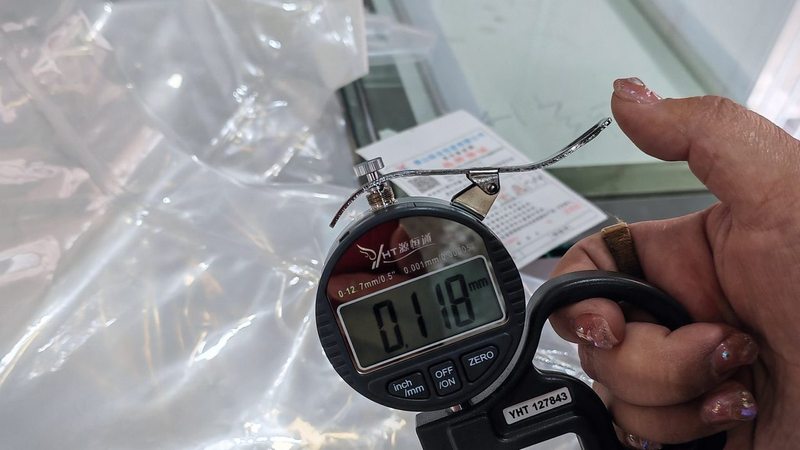
Resistance-tested fabric and seams.
Static-controlled liners bonded into the grounding circuit — options below.
Clear "ground before use" marking.
Dedicated connection point for earth bonding.
If your product needs a moisture or contamination barrier, the liner must be part of the static-control system — not an afterthought. For Type C bags, three liner classes are permitted; each is electrically bonded to the bag's grounding tab where required.
| Configuration | Liner class | Surface resistivity | Choose when |
|---|---|---|---|
| Type C, no liner | — | — | Free-flowing combustible dusts that need no moisture or oxygen barrier |
| Type C + L1 liner | L1 (conductive) | ≤ 10⁸ Ω/sq | Combustible powders needing a liner; liner bonded to the ground tab and verified with the bag circuit |
| Type C + L1C liner | L1C (conductive laminate) | Conductive inner (e.g. aluminium) layer | Hygroscopic or solvent-laden powders needing a high moisture/oxygen barrier plus static control; bonded to ground |
| Type C + L2 liner | L2 (antistatic) | 10⁹–10¹² Ω/sq | Lower-risk combustible dusts where an antistatic — not fully conductive — liner is sufficient |
Plain PE and L3 liners are not permitted in Type C bags: they interrupt the conductive path and can accumulate charge. Full definitions on the L1 / L1C / L2 / L3 liner page.
When fine flammable dust or solvent vapours are present, a normal bag can build static. A Type C bag moves that charge to earth — but only if it is connected.
Pigments, toners, carbon black — combustible dust handling.
Where solvent vapours demand controlled static dissipation.
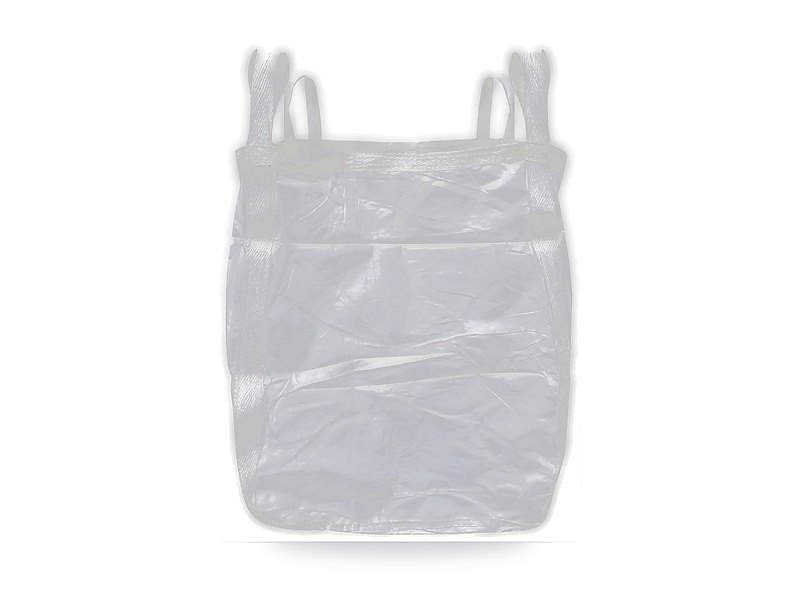
ATEX-classified filling and discharge operations.
PP tape + conductive yarn woven in.
Optional lamination.
Anti-static label printed.
Conductive parts joined to ground tab.
Circuit resistance verified.
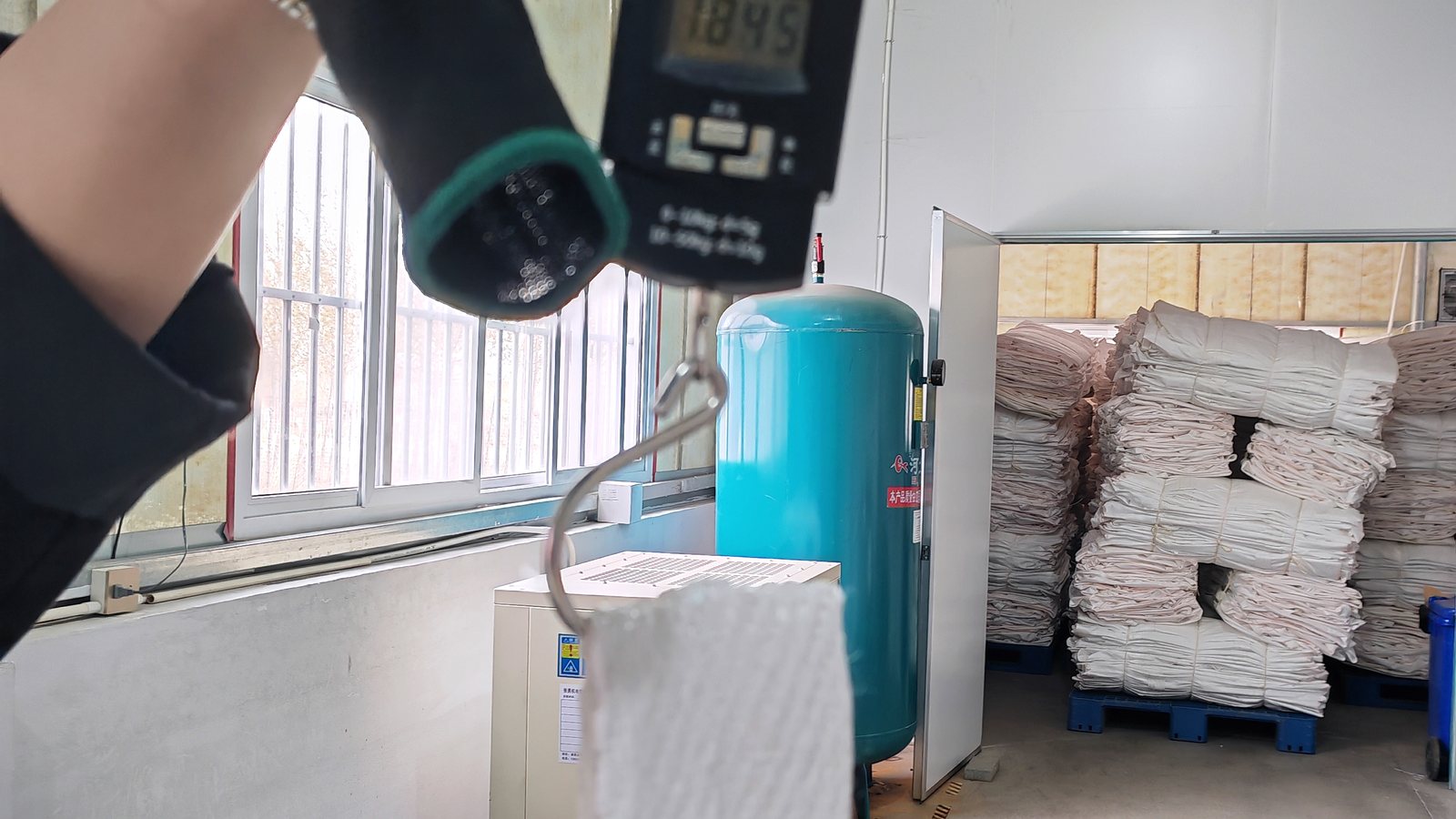
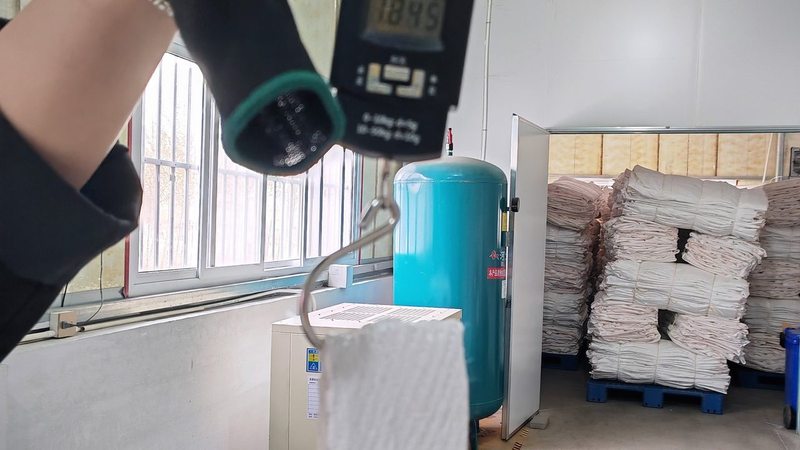
ZONGYE produces FIBCs in-house in Luannan County, Tangshan, Hebei, China. In-house weaving and sewing let us control conductive-yarn placement and resistance testing per batch.
See factory & capacity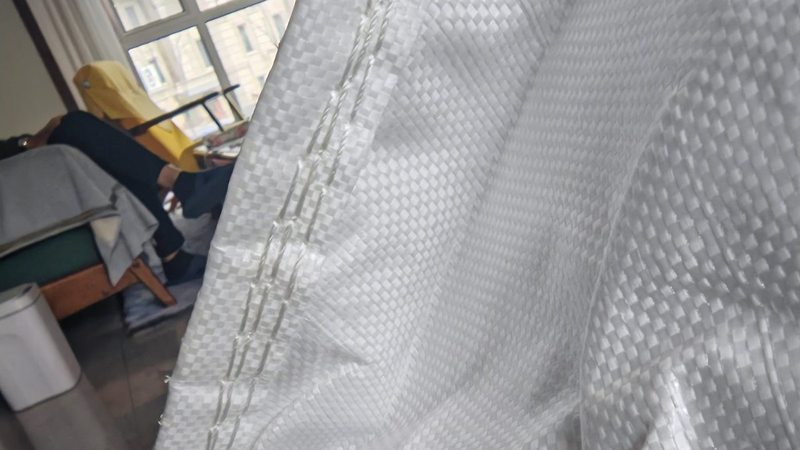
Note: a Type C bag must be grounded at every fill and discharge. We supply the grounding tab and test data; safe earthing on site remains the operator's responsibility. ISO 9001 covers our management system — product static performance is confirmed per batch, not assumed from a general certificate.
Material, dust/solvent class, dimensions, SWL, quantity.
Construction, top/bottom, loops, liner, grounding, documents.
Sample or final specification confirmed before bulk run.
Production, resistance test, packing, shipment.
500 pcs (standard)
Custom 1,000–2,000 pcs; trial orders special-approved.3–5 working days
Standard sample free (freight collect); custom 7–10 days. Test report on request.15–25 days (standard)
Custom 20–35 days from order confirmation & deposit.FOB Tianjin / CIF / DDP
T/T 30% + 70% before shipment or against B/L copy; L/C at sight with guarantee; Sinosure accepted.Tell us your material and grounding conditions. We'll advise Type C vs D and send a quote with test data.