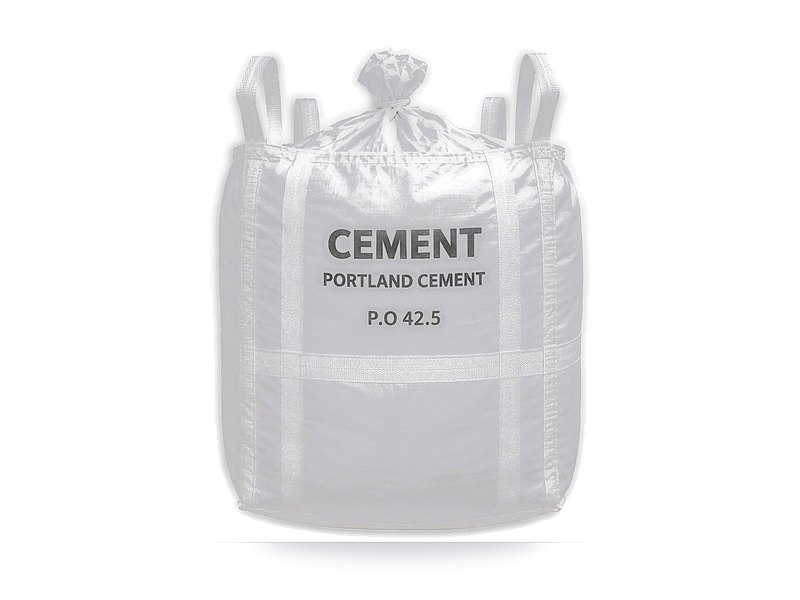
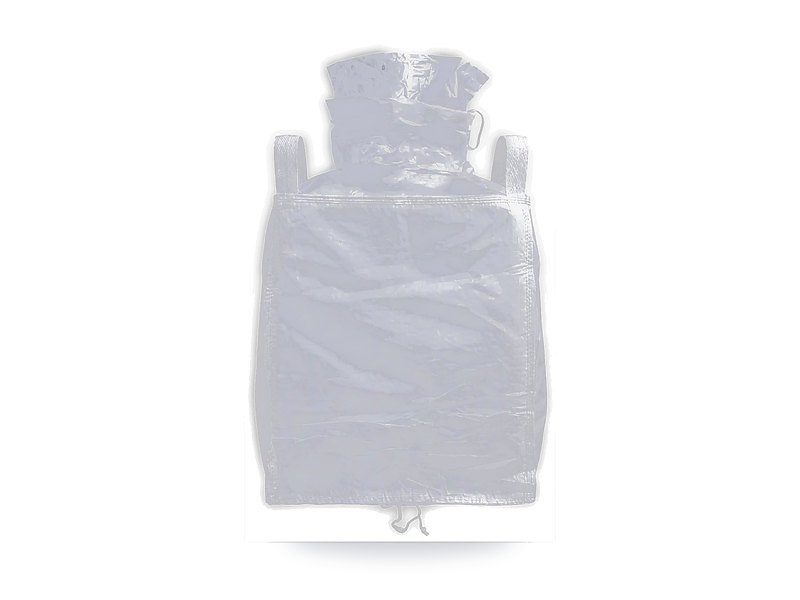
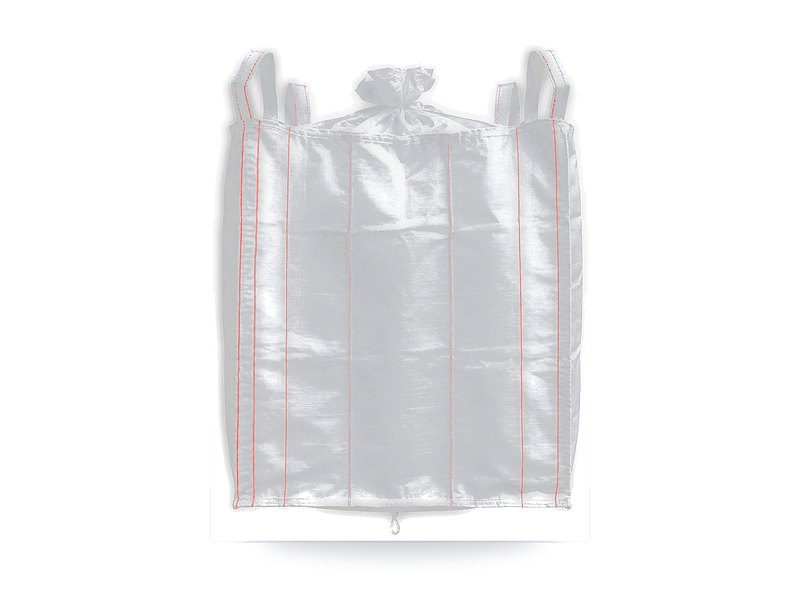
Selection starts with the material, not the bag. We map powder characteristics and handling conditions to an electrostatic type, body construction and liner — then document the build.
 EXPORT-READY · FOB / CIF / DDP
Pain points: caking from moisture, fine-powder leak through seams, static build-up with solvent materials, and EU export files for food-contact or REACH.
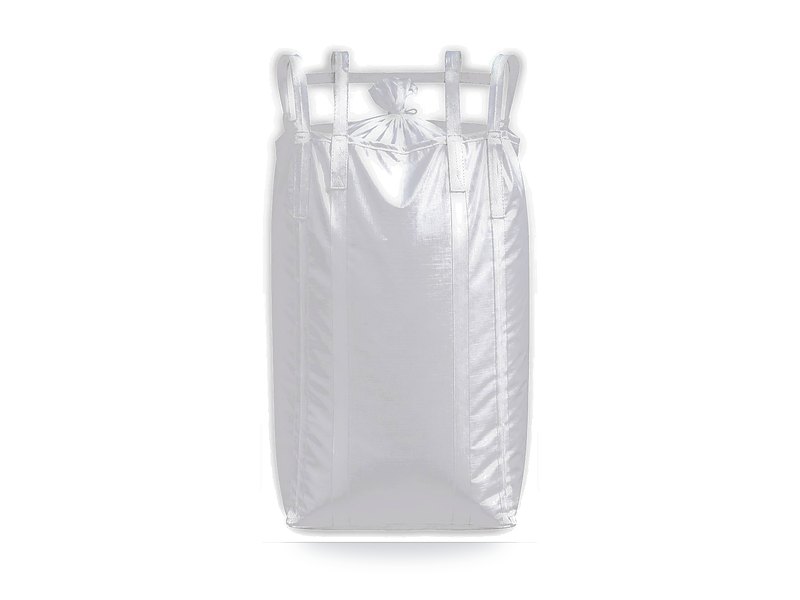
U-Panel or 4-Panel; switch to tubular for fine powders. PE liner 0.08 mm or PE coating.
Type C (grounded) or Type D for combustible dust / gas environments; 4+2 loops, belt constraint.
Heavy-metal migration, total migration, phthalates, MOSH/MOAH reports supplied with the shipment.
Value: fine-powder loss cut from ~2% (industry norm) to below 0.05%; compliance files travel with the goods.
Pain points: moisture, oxidation and metal contamination; near food-grade cleanliness; some workshops forbid earthing.
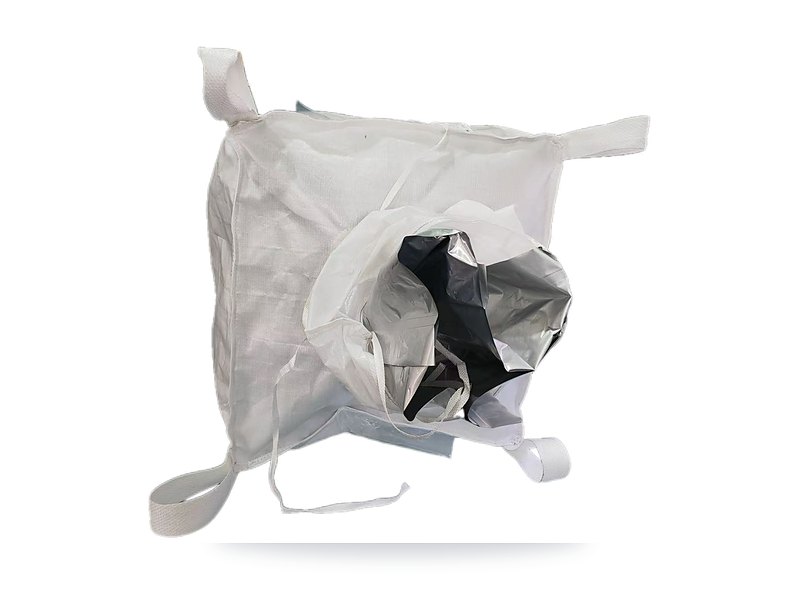
Aluminium-foil composite liner (PET/AL/PE), heat-sealed — cuts water-vapour transmission to below 1/50 of PE.
Type D (no grounding) or Type C + grounding monitoring; single-loop integrated lifting removes the seam weak point.
Independent inner packaging, workshop dust removal, foreign-object control, built-in pallet option.
Value: consistent batch quality with controlled moisture and zero metal contamination.
Pain points: food-contact compliance, caking, pests and foreign objects; EU (EU 10/2011) and US (FDA) documentation.
Tubular (seam-free) or food-grade baffle; small spout + tie cord to reduce dust.
Food-grade PE 0.06–0.10 mm, individually hygienically packed.
Food-contact certification, migration, heavy-metal and microbiological testing.
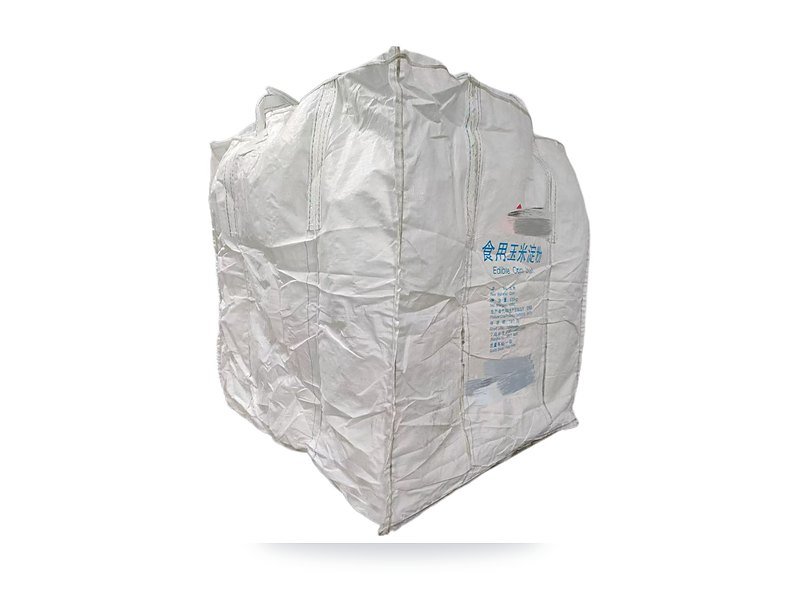
Delivered materials: starch, flour, sugar, salt, milk powder, sunflower seeds, almonds, pistachios, MSG, food additives.
Pain points: heavy loads (1.5–2 t), sharp-edged material cutting the bag, abrasion shortening life, container waste, dust fines attracting penalties.
220–250 g/m² high-strength base fabric; double reinforcement at stress points.
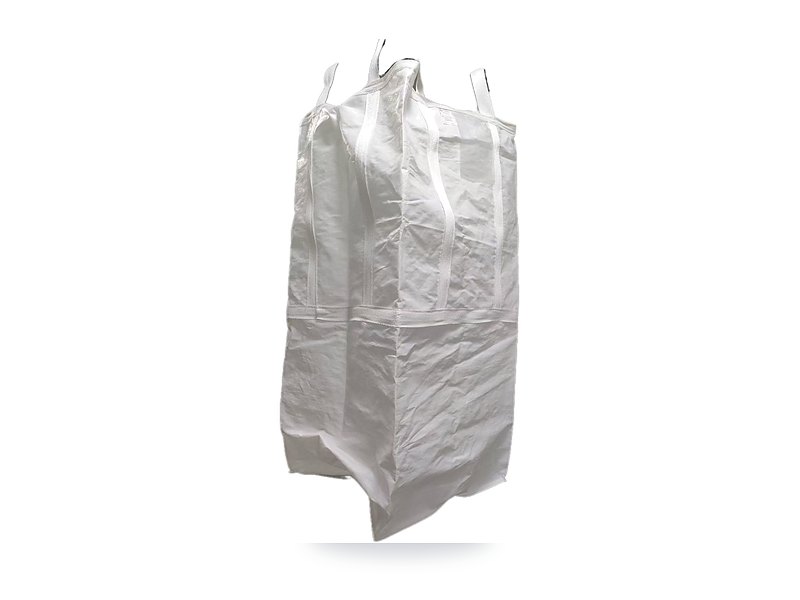
4-Panel + cross / lattice bottom for heavy loads; wear-indicator line for reuse checks.
Baffle bags raise container fill by 15–20%; tubular + PE coating + small spout for dust control.
Value: a 220 g/m² bag lasts 6–8 cycles, 250 g/m² up to 8–10 — versus single-use, per-ton packaging cost can fall by up to 65%.
Pain points: tear resistance, stacking, dust control; cold-weather brittleness on northern sites.
Anti-tear fabric; anti-UV formula for outdoor storage (up to 24 months).
Cold-resistant PP copolymer keeps strength and flexibility at −25 °C.
Coating + anti-leak seam + skirt cover; quoted by actual site conditions.
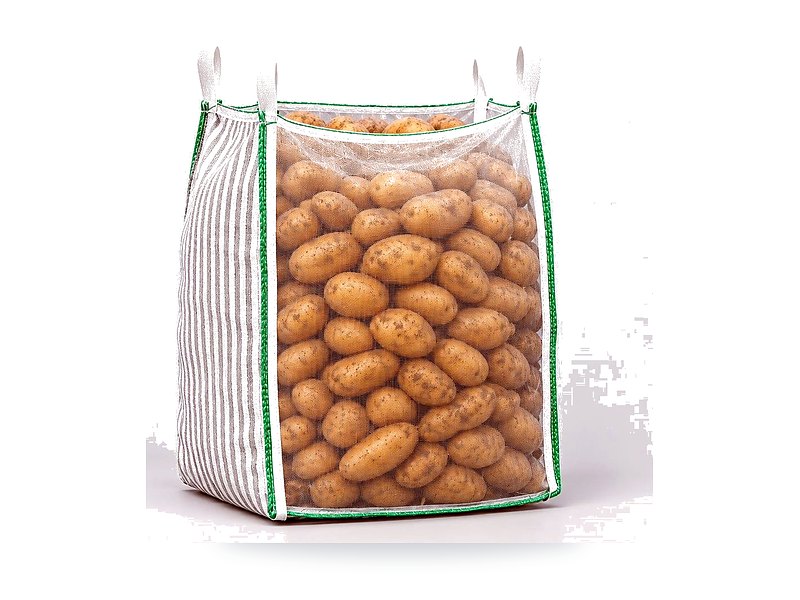
Pain points: ventilation to prevent mould (onion, potato), moisture control (feed), freshness (fruit & veg), cost sensitivity.
Mesh / full-mesh / half-mesh / perforated ventilated bags.
2 loops (light) or 4 loops; freshness (micro-porous film), anti-mould options.
Fabric down to 160 g/m², standardised sizes, volume pricing.
Pain points: no dangerous-goods certificate means no shipment; UN model is bound to the plant + model; hazardous-waste transfer needs double leak protection; inspections need full documentation.
UN 13H1/13H2 (woven), 13H3/13H4 (coated), with dangerous-goods certificate.
Double leak protection (heat-sealed liner + outer), triple-thick anti-blast.
DG certificate, performance test result sheet, use appraisal result sheet.
Note: UN certification is bound to plant + model. A certificate from another plant cannot be reused — a new model needs a new certification.
When standard bags can't solve the job, our eight patented structures step in — each tied to a real on-site problem.
Insert supports the bag upright; wear sleeve protects from sharp objects; insulation option.
Square tube + support plate as one unit; forklift direct, no separate pallet.
Front opening + protective cover + Velcro, corner supports keep it upright for sorting lines.
Share the material, load and destination. We return a configuration, drawing and quote — usually within 24 hours.